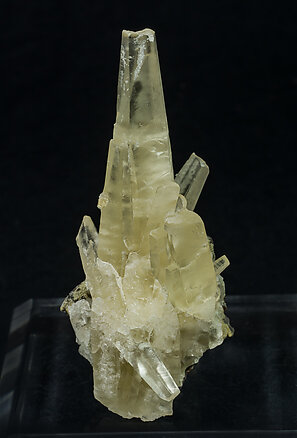
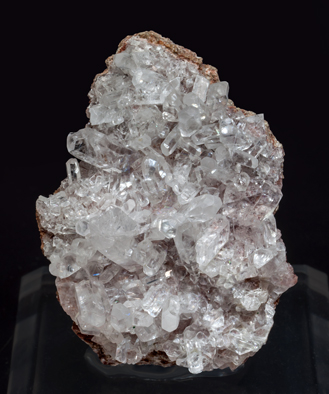
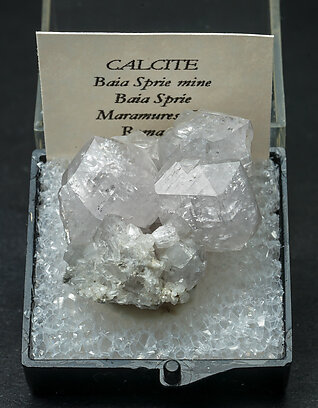
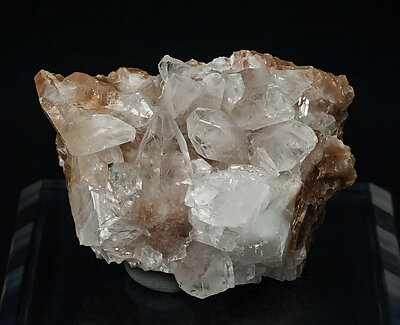
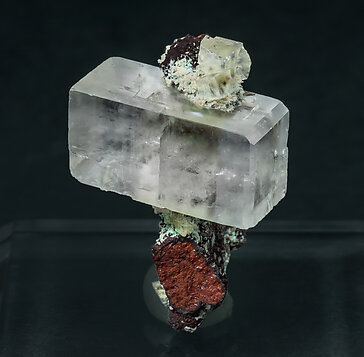
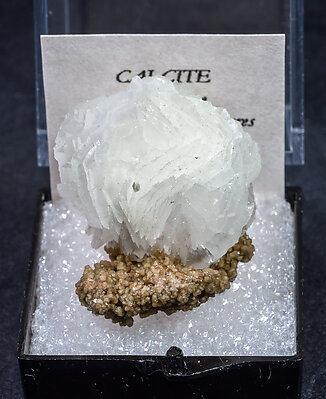
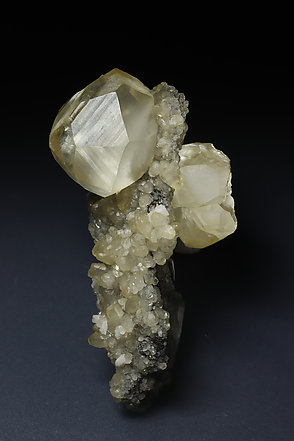
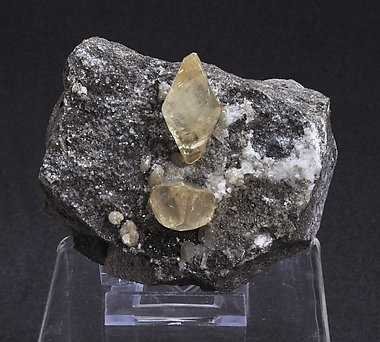
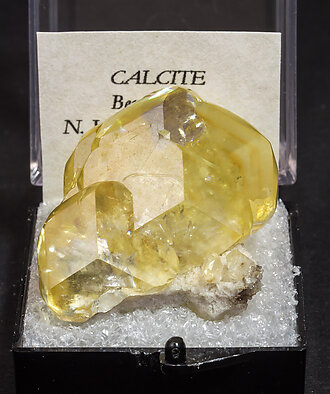
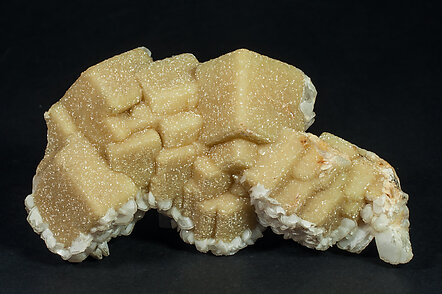
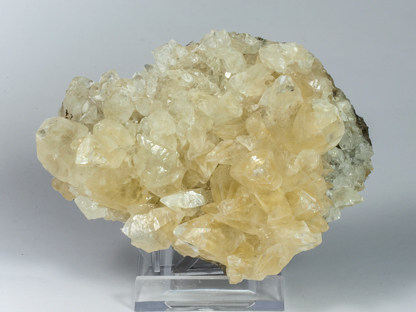
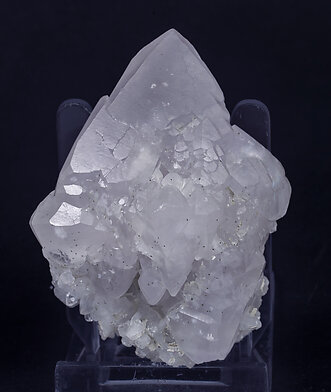
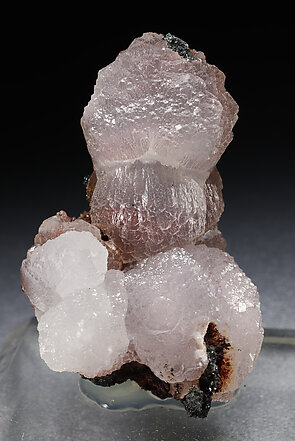
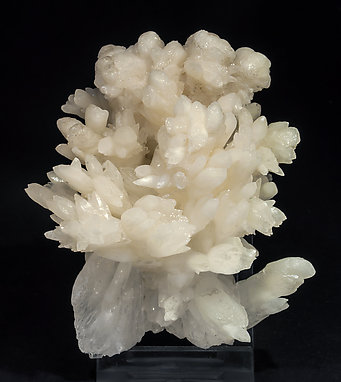
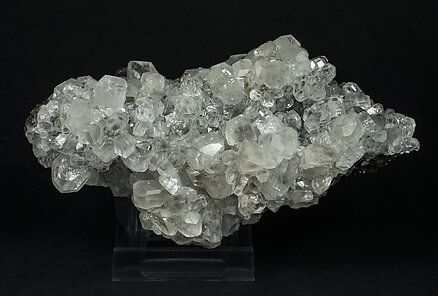
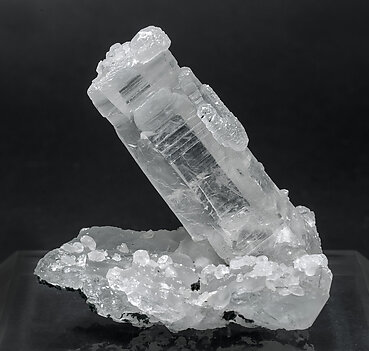
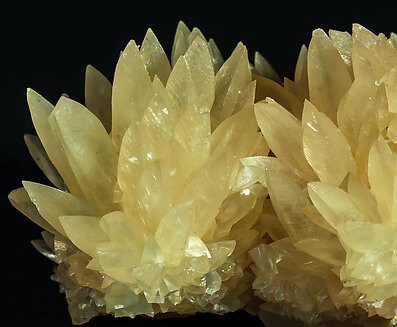
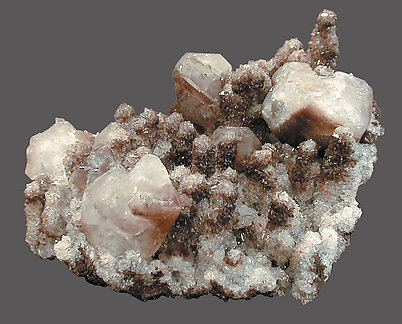
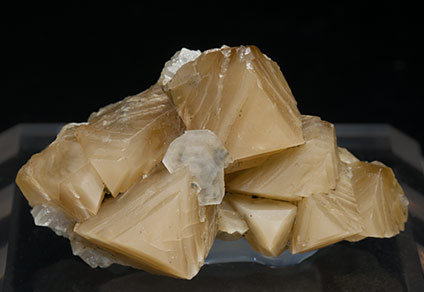
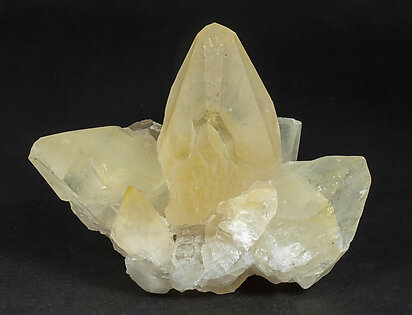
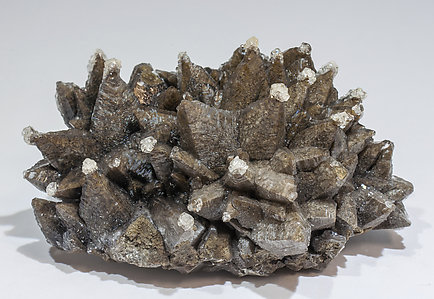
Aggregate of Calcite crystals forming a dense and uniform coating on the matrix, with small but well-defined crystals. The intensity of its color stands out, with very vivid and homogeneous orange tones. The vitreous luster and the large number of exposed faces enhance the luminous effect of the whole.
The coloration, probably due to the presence of iron impurities, is characteristic of alteration environments in sedimentary systems where fluid circulation favors the incorporation of chromophore elements into the Calcite.
Grünstadt is a locality located on the eastern edge of the Palatinate Forest, in transition toward the Upper Rhine Graben. In the Grünstadt area, mineralization is associated with sedimentary rocks, with Calcite occurring in cavities and fractures, often forming simple but well-defined crystalline aggregates. Calcite appears as a secondary phase, typically lining voids or coating surfaces in alteration zones.
Geologically, the area belongs to the western margin of the Upper Rhine Graben, a tectonic structure related to the Rhine rift system. Triassic rocks (Buntsandstein and Muschelkalk) and interbedded carbonate levels have undergone fracturing and fluid circulation, favoring cavity formation and secondary mineral precipitation. In this setting, Calcite is one of the most common species, linked to dissolution–reprecipitation processes in low-temperature environments.
Grünstadt, Bad Dürkheim District, Rhineland-Palatinate/Rheinland-Pfalz Germany
Specimen size: 7.8 × 5.3 × 3.9 cm = 3.07” × 2.09” × 1.54”
Main crystal size: 1.1 × 0.4 cm = 0.43” × 0.16”
|