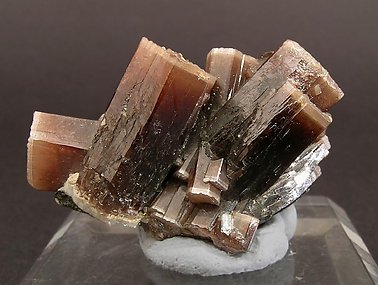
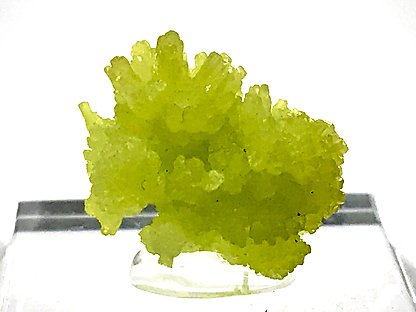
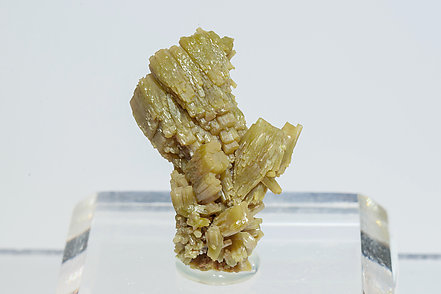
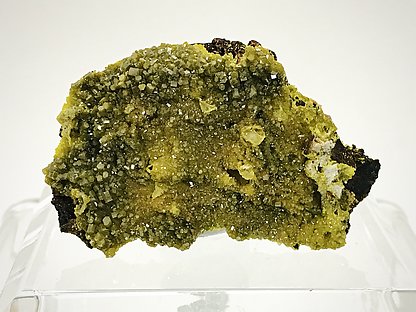
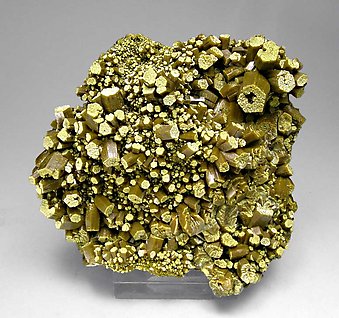
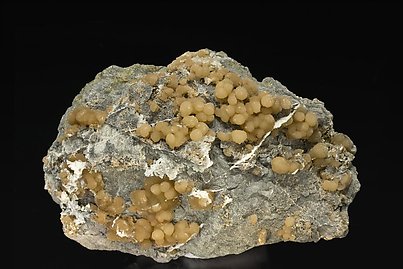
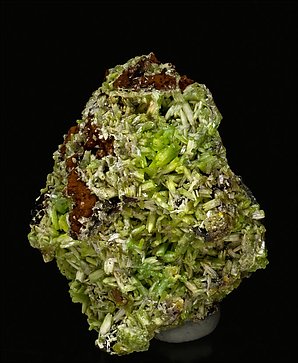
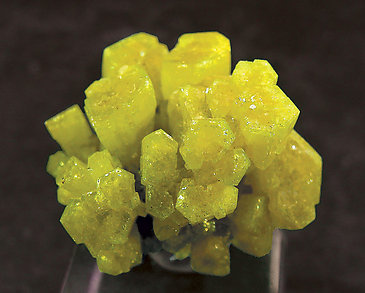
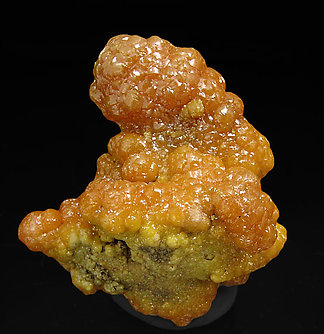
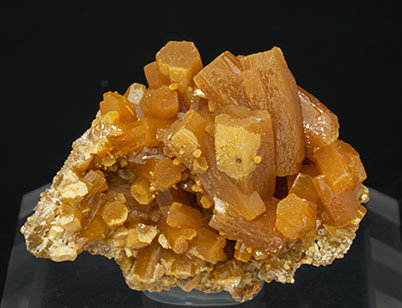
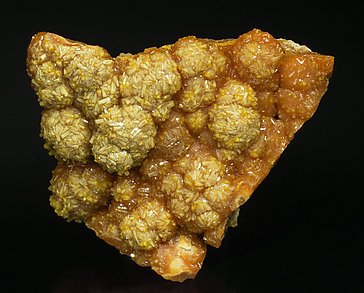
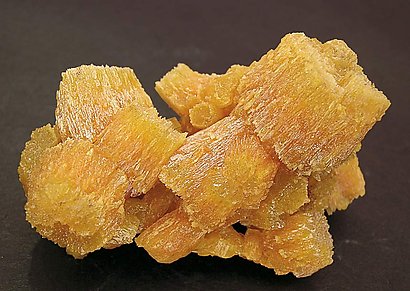
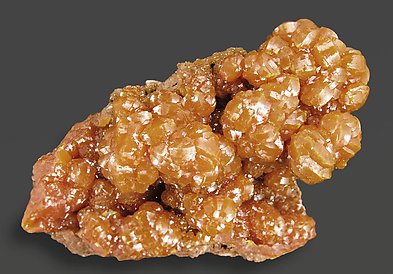
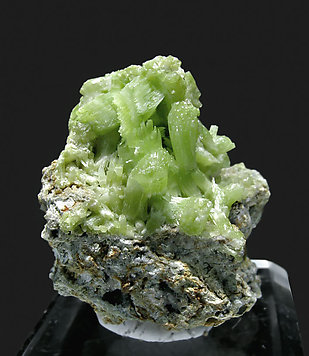
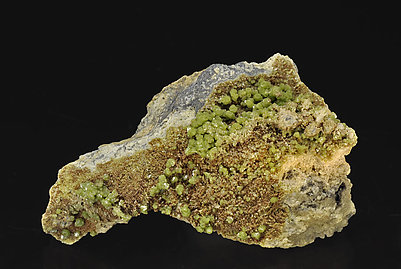
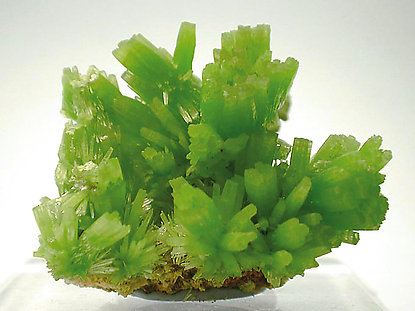
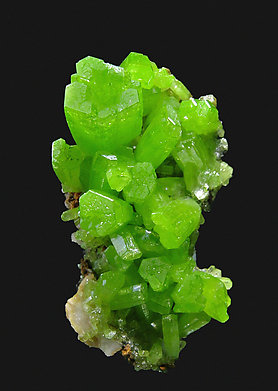
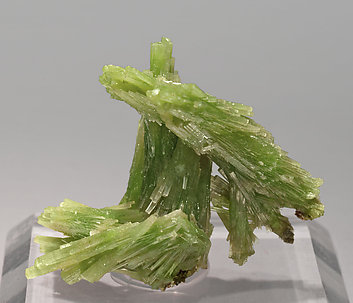
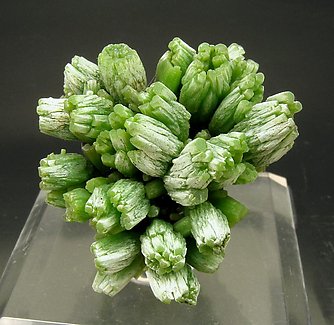
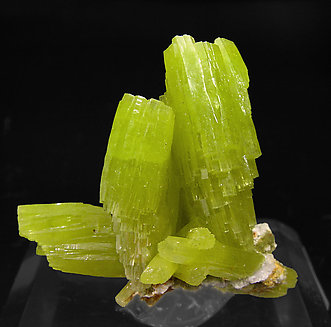
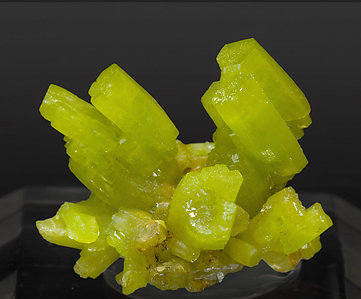
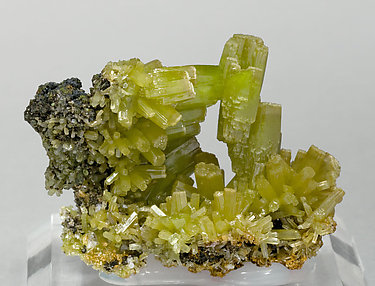
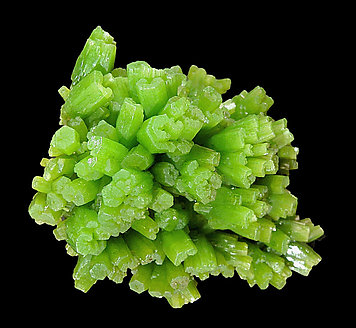
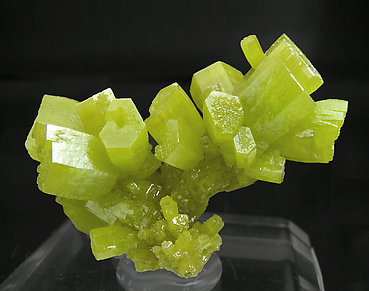
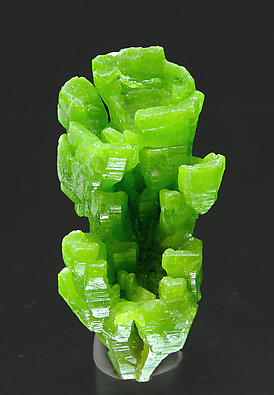
Group of strongly curved aggregates of Pyromorphite crystals forming very distinctive globular growths on a limonite matrix. The specimen stands out for the unusual morphology of these highly aerial and aesthetically appealing aggregates, as well as for their intense orange color and remarkable luster.
It has been suggested that the orange globular crystals from Bunker Hill correspond to As-bearing Pyromorphite. In order to verify this assumption, several samples were analyzed, confirming that they are, in fact, pure Pyromorphite, with no detectable arsenic content.
The specimen was from the James Catmur collection.
Bunker Hill was one of the most important and productive mines in the Coeur d'Alene mining district of northern Idaho. For more than a century, it was one of the world's major lead and silver producers and is particularly well known among collectors for specimens of Pyromorphite, Cerussite, Anglesite, Galena, Sphalerite and numerous secondary minerals from the oxidation zone.
The mineralization at Bunker Hill occurs in Precambrian sedimentary rocks of the Belt Supergroup, cut by extensive fracture and fault systems. The ore bodies mainly consist of lead-zinc-silver hydrothermal veins formed by hot mineralizing fluids circulating through these structures. Weathering and oxidation of the primary sulfides produced an extensive oxidation zone where highly collectible secondary minerals developed, including the famous orange, yellow and green pyromorphites.
Bunker Hill Mine, Kellogg, Coeur d'Alene mining district, Shoshone County, Idaho USA (1/06/2002)
Specimen size: 8 × 5.3 × 4.4 cm = 3.15” × 2.09” × 1.73”
|